
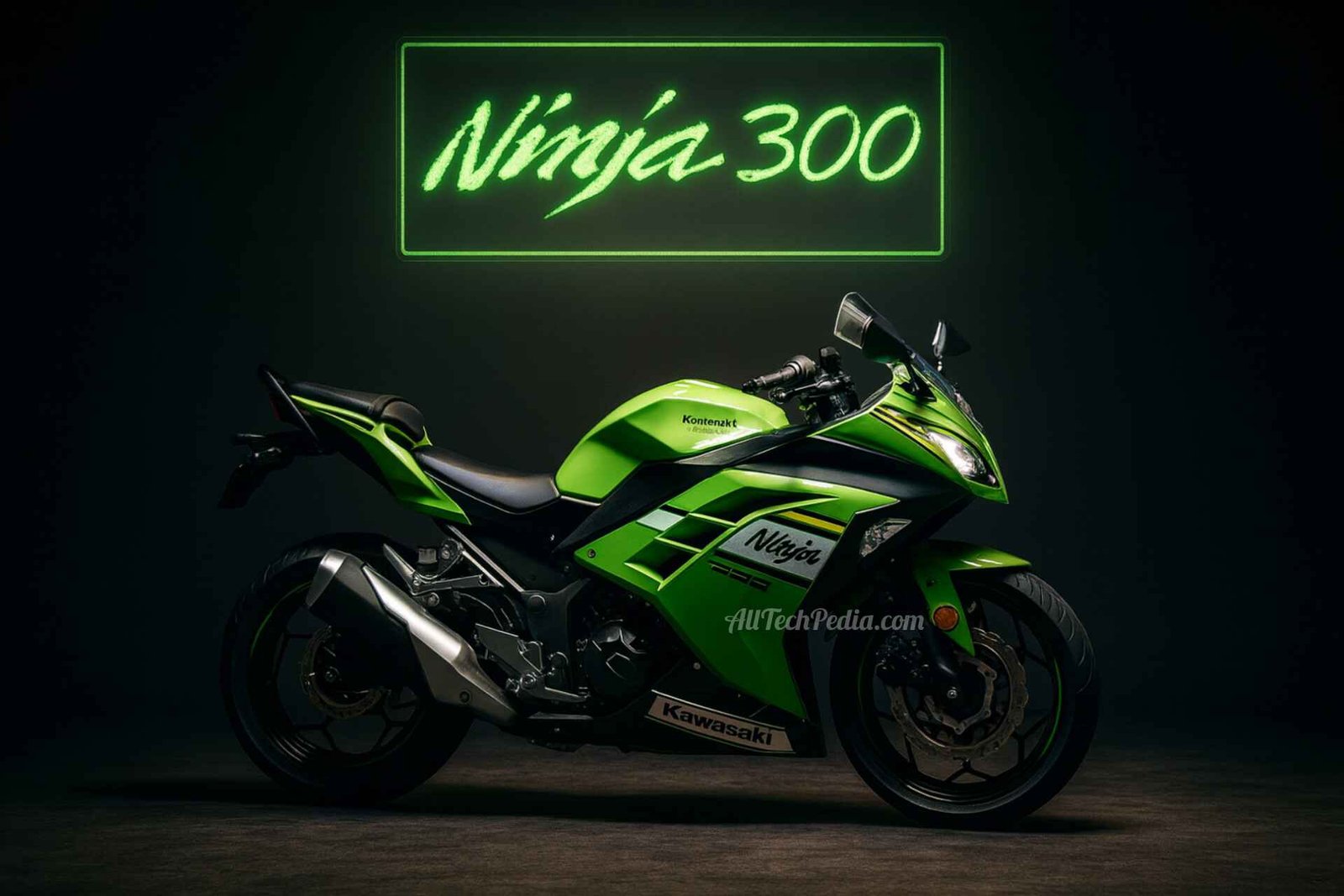
When discussing entry-level sportbikes in India, the Kawasaki Ninja 300 inevitably dominates conversations . This motorcycle has earned legendary status among riding communities for its unique ability to welcome beginners while keeping experienced riders thoroughly entertained. Unlike single-cylinder competitors that prioritize raw specifications, the Ninja 300 focuses on delivering a complete, confidence-inspiring package that transforms ordinary riders into skilled enthusiasts .
🏍️ Understanding the Current Pricing Structure
The 2025 Kawasaki Ninja 300 carries an official price tag of ₹3,43,000 (ex-showroom) in India . However, on-road costs vary significantly across different cities due to regional taxes and registration charges. Potential buyers should expect final prices ranging from approximately ₹3.65 lakh to ₹4.00 lakh depending on their location .
This investment positions the Ninja 300 in the premium segment of sub-400cc sportbikes, competing directly with alternatives like the TVS Apache RR 310 and BMW G 310 RR . While some rivals undercut it on sticker price, the Kawasaki justifies its premium through superior engine refinement and proven long-term reliability that reduces ownership hassles .
Kawasaki offers the Ninja 300 in a single, fully-equipped variant, eliminating confusing trim choices . Buyers select from three distinctive color schemes: Lime Green, Candy Lime Green, and Metallic Moondust Gray, with the signature green options celebrating Kawasaki’s racing legacy .
🏍️ The Heart of the Beast: 296cc Parallel-Twin Engine
What truly separates the Ninja 300 from its competitors lies beneath the fairings—a sophisticated 296cc liquid-cooled parallel-twin engine . This powerplant generates 39 PS at 11,000 rpm and produces 26.1 Nm of torque at 10,000 rpm, figures that tell only part of the story . The real magic happens in how smoothly this twin-cylinder design delivers its power compared to harsher single-cylinder alternatives .
The engine employs DOHC valve actuation with 8 valves and maintains a compression ratio of 10.6:1 . Fuel delivery comes through a sophisticated injection system featuring dual 32mm throttles, creating remarkably linear throttle response that new riders find intuitive . This dual throttle valve setup also contributes to improved fuel economy without sacrificing performance .
Power transmission happens through a six-speed gearbox equipped with Kawasaki’s racing-inspired Assist and Slipper clutch technology . This system dramatically reduces clutch lever effort during operation while preventing dangerous rear wheel hop when downshifting aggressively into corners . For beginners still mastering smooth gear changes, this feature provides a significant safety advantage .
Real-world performance testing reveals the Ninja 300’s capable mid-range punch, with 20-50 kph acceleration in second gea accomplished in merely 2.79 seconds . This strong mid-range makes urban overtaking maneuvers safe and effortless without requiring constant gear swapping .
🏍️ Practical Fuel Economy for Daily Riding
Despite sporting genuine performance credentials, the Ninja 300 demonstrates surprisingly practical fuel consumption . Official ARAI testing certified the motorcycle at 30 kmpl, though actual road conditions typically yield between 25-30 kmpl depending on throttle discipline and traffic patterns .
This efficiency stems from intelligent engine mapping and the dual throttle valve system that optimizes combustion . Riders can enjoy spirited acceleration when desired while still maintaining reasonable fuel costs during mundane commuting duties . The 17-liter fuel tank provides adequate range for weekend touring without frequent refueling interruptions .
🏍️ Styling That Commands Attention
Kawasaki designers drew heavy inspiration from the brand’s flagship superbikes when shaping the Ninja 300’s bodywork . The front fascia features aggressive dual LED projector headlights borrowed from the ZX-6R middleweight champion, giving the 300 a menacing stare that belies its entry-level status . Above that sits a floating-style windscreen taken directly from the legendary ZX-10R, enhancing both aerodynamics and visual drama .
Large-volume fairings create substantial road presence while serving functional purposes . These bodywork panels slice through air resistance at highway speeds and shield riders from wind blast and road debris . Sharp character lines and aggressive angles throughout the design emphasize the motorcycle’s sporting intentions .
Bold racing graphics and the iconic Kawasaki branding ensure the Ninja 300 gets noticed in parking lots and on highways . Despite measuring 2,015 mm in overall length, the compact proportions keep the bike manageable in congested urban environments .
🏍️ Rider-Focused Ergonomic Design
Kawasaki’s engineers balanced sporting character with real-world usability when configuring the Ninja 300’s ergonomics . The seat positions riders at 785mm height, accessible for most body types while maintaining the forward-slanting position necessary for proper sportbike riding dynamics .
Handlebar placement deserves special mention—wide and slightly raised bars provide excellent leverage for steering inputs without forcing riders into an extreme racing crouch . This thoughtful setup reduces arm and shoulder fatigue during extended rides while maintaining adequate weight transfer for spirited cornering.
An innovative patented radiator fan cover addresses a common sportbike complaint by directing hot engine air away from riders’ legs . This feature transforms stop-and-go traffic situations from unbearable heat torture into tolerable experiences, particularly valuable in India’s tropical climate . The seat design accommodates both solo riding and two-up passenger duties comfortably .
🏍️ Strong Foundation: Chassis and Suspension
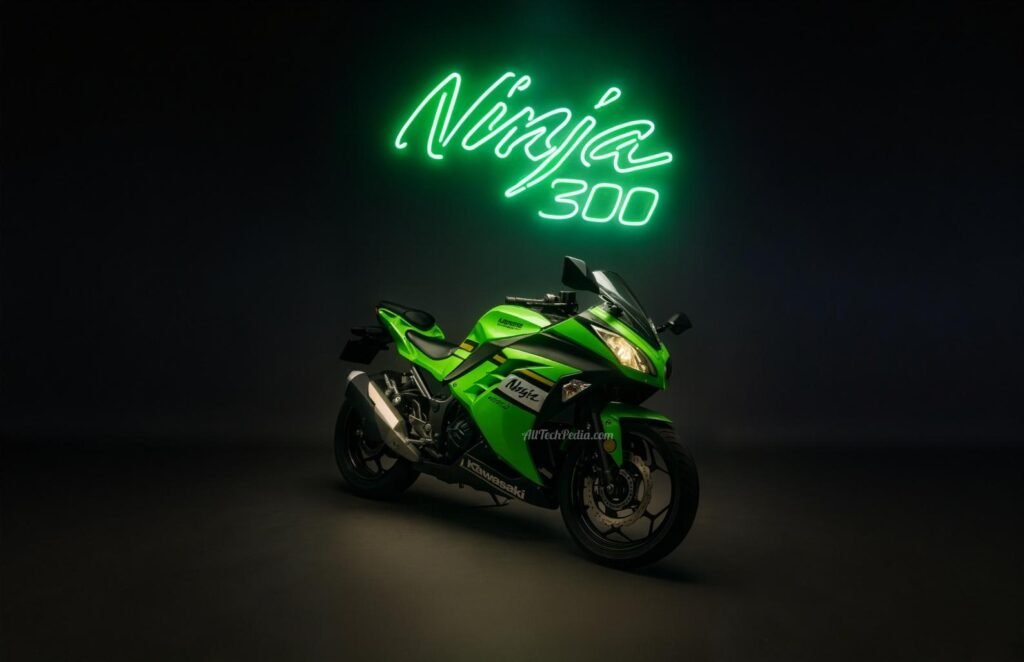
The Ninja 300 employs a steel-tube diamond frame construction that balances structural rigidity with manufacturing cost efficiency . This backbone-style chassis delivers confidence-inspiring handling precision at speed while maintaining enough compliance for imperfect pavement . The tubular steel construction contributes to the motorcycle’s 179 kg kerb weight, which feels manageable once rolling .
Suspension components include 37mm telescopic forks handling front duties, paired with a Bottom-link Uni-Trak rear monoshock . This combination strikes an admirable balance between sportbike responsiveness and everyday ride quality over bumpy roads . The rear shock features 5-way preload adjustability, allowing riders to optimize settings for solo riding or when carrying passengers .
Wheels measure 17 inches at both ends, wearing appropriately sporty rubber that provides adequate grip for the available power . The suspension setup inspires confidence during enthusiastic cornering while remaining forgiving enough for new riders still developing their skills .
🏍️ Dependable Braking Performance
Stopping power comes from a 290mm petal-style disc up front gripped by a dual-piston caliper, working alongside a 220mm rear disc �. Both ends receive dual-channel ABS as standard equipment, providing crucial intervention during emergency stops or slippery conditions .
The petal disc design promotes efficient heat dissipation during repeated hard braking, maintaining consistent lever feel during aggressive riding . For beginners, the ABS system offers invaluable peace of mind while learning proper braking techniques and weight transfer . Experienced riders appreciate the progressive feel that enables advanced techniques like trail-braking into corners .
🏍️ Comprehensive Instrument Display
The Ninja 300 features an intelligent hybrid instrument cluster combining an analogue tachometer with a multi-function LCD panel . This arrangement gives riders the visceral satisfaction of watching a traditional needle sweep toward redline while enjoying digital convenience for other information .
The LCD screen displays essential data including speed, dual trip meters, fuel level, odometer readings, and time—all remaining legible in various lighting conditions . A unique Economical Riding Indicator helps riders maximize fuel efficiency by showing when their throttle application falls within optimal consumption ranges . This feature particularly benefits new riders developing smooth throttle control habits .
🏍️ Competitive Landscape Analysis
The Ninja 300 faces stiff competition from several capable alternatives in the Indian market . The TVS Apache RR 310 presents a compelling value proposition at ₹2.56 lakh, offering 37 PS from its single-cylinder BMW-derived engine and claiming superior 32 kmpl fuel economy . However, the Kawasaki counters with smoother twin-cylinder refinement and stronger brand heritage .
KTM’s RC 390 priced at ₹3.39 lakh delivers more power at 42 PS but demands greater rider skill with its aggressive character . The BMW G 310 RR sits below the Ninja at ₹2.81 lakh but offers less power from its single-cylinder configuration. The Ninja 300’s parallel-twin smoothness and proven reliability provide distinct advantages for riders prioritizing refinement over raw specifications .
🏍️ The Lasting Appeal Factor
The Ninja 300 has remained mechanically similar since its 2013 Indian debut, yet continues attracting buyers because it executes fundamentals flawlessly . The parallel-twin engine character builds new rider confidence without overwhelming capabilities, while experienced riders appreciate its predictable behavior .
Substantial localization keeps pricing competitive while upholding Kawasaki’s quality standards . Interestingly, India represents one of few remaining global markets where Kawasaki still offers the Ninja 300, as most regions received the larger Ninja 400 replacement . This makes Indian buyers privileged to access this proven platform at accessible pricing .
🏍️ Making Your Decision: Why to Buy this?
The Kawasaki Ninja 300 represents an intelligent entry point into authentic sportbike ownership for Indian enthusiasts . Its blend of approachable power delivery, comfortable riding position, and iconic Ninja heritage creates a package equally suited for daily commuting and weekend canyon carving adventures .
This motorcycle excels for newer sportbike riders seeking a platform they can develop skills with rather than immediately outgrowing . The forgiving power characteristics, standard ABS protection, and manageable weight foster rapid confidence building, while the engaging nature maintains interest for years . For those wanting reliable, stylish performance backed by Kawasaki’s racing DNA without larger displacement intimidation, the Ninja 300 deserves serious consideration .